Quick Answer: Loft boarding in the UK typically costs around £600–£3,000+, or approximately £50–£100 per m² fitted. The final cost will depend on the size of your loft, the boarding system, existing insulation, access and any additional work required.
If you are wondering how much loft boarding costs in the UK, the final price will depend on factors such as the size of the loft, the boarding system required, existing insulation, access and any additional work needed.
At Vital Loft Solutions, our loft boarding costs £81 per square metre including VAT, giving homeowners a clear starting point when planning their project. The overall cost will depend on how much of your loft you want to board and whether additional improvements, such as a new loft hatch, loft ladder or insulation, are required.
A professionally planned loft boarding system can transform unused loft space into practical, accessible storage while ensuring the existing insulation and layout are properly considered.
Every loft is different, which is why a professional survey is the best way to determine the requirements and overall cost of your project.
At Vital Loft Solutions, we help homeowners in Peterborough and surrounding areas create practical loft storage with professional loft boarding, insulation, loft hatches, loft ladders and other access solutions.
Loft Boarding Prices at a Glance
Typical UK loft boarding costs in 2026 can vary significantly according to the property and installation:
Loft Boarding Project | Typical Cost Guide |
Small loft boarding project | From around £500 |
General loft boarding | £600–£3,000+ |
Professional fitted boarding | Around £50–£100 per m² |
Standard loft boarding | £80 per m² including VAT |
Raised boarding system, 20–40 m² | Around £1,000–£3,600 |
Boarding and insulation | Around £1,500 on average |
Lighting/electrical additions | Often £60–£150+ |
These are indicative UK prices rather than fixed quotes from Vital Loft Solutions. Your actual installation costs will depend on factors including loft size, access, existing insulation, the condition and arrangement of the loft joists and any additional features required.
What Affects the Cost of Loft Boarding?
The cost of loft boarding is primarily determined by the amount of floor space you want to create, the type of boarding system required and how straightforward the loft is to work in.
A small, easily accessible loft that only requires a modest area for light storage will naturally cost less than boarding an entire loft with a raised system, new loft hatch, lighting and access ladders.
The installation process may also uncover factors that need to be addressed before boarding begins. Electrical cables, pipes, existing insulation and awkward structural elements can all affect how professional installers approach the project.
Access difficulties can significantly increase the overall cost because additional labour or modifications may be required to get materials into the attic space and install them safely.
How Does Loft Size Affect Boarding Cost?
Loft size is one of the biggest factors influencing loft boarding prices because a larger loft area requires more materials and labour.
If an installer charges based on the square metre, boarding 10 m² will naturally cost considerably less than creating 30 m² or 40 m² of usable storage space.
However, you do not necessarily need to board the entire loft.
For many households, creating enough space for suitcases, Christmas decorations, boxes and other occasional-use belongings is sufficient. A targeted storage area can therefore be a more cost-effective option than covering every available square metre.
A professional survey can help establish how much floor space you genuinely need.
What Is the Difference Between Standard and Raised Loft Boarding?
One of the most important decisions when boarding a loft is whether you need standard loft boarding or a raised loft boarding system.
Standard loft boarding involves fitting the boards on top of 3×2 timber, which creates additional strength and structure for the boarded area. This provides a secure base for practical loft storage while allowing the installation to be properly supported rather than simply laying boards directly onto the existing ceiling joists.
Modern insulation recommendations can require substantially more depth than the height of the ceiling joists. The Energy Saving Trust currently recommends a minimum insulation depth of 270 mm for mineral wool loft insulation.
If boards are simply laid over this insulation and compress it, its thermal effectiveness can be reduced.
Raised loft boarding provides an alternative.
How Does a Raised Loft Boarding System Work?
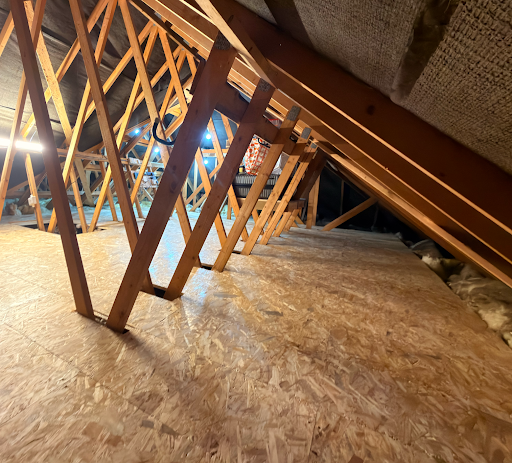
A raised boarding system creates a supporting structure above the ceiling joists so that the loft flooring sits above the insulation rather than directly on top of it.
Systems may use specialist supports or loft legs to create the necessary clearance between the insulation layer and the boarded loft floor.
This means the recommended insulation depth can be maintained while creating practical storage above it.
Raised systems can also help maintain appropriate airflow around the insulation, provided the overall installation has been properly designed and ventilation routes are not obstructed.
For many modern homes with deeper insulation, raised loft boarding is therefore a practical way to combine energy efficiency with extra storage space.
Why Shouldn’t You Compress Loft Insulation?
Compressing insulation can reduce its effectiveness because insulation works by trapping air within its structure.
If a thick insulation layer is squeezed into the limited space between the ceiling joists and the boards above, its ability to slow heat transfer can be compromised.
This matters because loft insulation has an important role in your home’s energy efficiency.
The Energy Saving Trust estimates that an uninsulated home can lose around 25% of its heat through the roof. Maintaining adequate insulation can reduce this heat loss and lower the amount of energy needed to keep the home comfortable.
Rather than sacrificing insulation depth to gain storage space, a raised loft boarding system can help accommodate both.
Can Loft Boarding Lower Your Energy Bills?
Loft boarding itself should not be treated as an energy-saving measure. The energy-efficiency benefit comes from ensuring the loft has adequate insulation and that the boarding system does not compromise it.
If your existing insulation is inadequate, upgrading it as part of your loft boarding project can improve energy efficiency and potentially reduce heating costs.
The Energy Saving Trust recommends a minimum depth of 270mm for mineral wool loft insulation. If your home currently has no loft insulation, installing 270mm could save a typical household in Great Britain around £230 per year, although actual savings depend on the property and its existing energy performance.
If you already have around 120mm of insulation, topping it up to 270mm will produce a smaller saving, but it can still help improve your home’s thermal performance.
Vital Loft Solutions provides loft insulation alongside boarding, allowing both storage and insulation requirements to be considered together.
How Much Does It Cost to Board and Insulate a Loft?
As a broad UK estimate, the average cost to board and insulate a loft can be around £1,500, although the actual figure can vary considerably.
The overall cost will depend on the loft area, how much existing insulation is present, whether it needs replacing or topping up, and whether a raised boarding system is required to preserve the recommended insulation depth.
For example, a home that already has adequate insulation in good condition may only need the new boarding system. Another property may require insulation upgrades, raised boarding, improved loft access and additional ventilation considerations.
The Energy Saving Trust currently estimates that professionally installing 270mm of insulation in a previously uninsulated semi-detached home costs around £750 in Great Britain. Topping existing insulation up from 120mm to 270mm is estimated at around £600.
These insulation costs are separate from the cost of the loft flooring itself and demonstrate why a survey is important when estimating a complete project.
Does a Loft Hatch Affect the Cost?
Yes. The condition, position and size of the loft hatch can affect the overall boarding cost.
If your existing hatch provides easy access, it may be possible to retain it. However, an awkward or undersized opening can make both the installation process and everyday use of the finished loft more difficult.
A hatch upgrade or enlargement will add to the total project cost, but it can make the loft considerably easier to access.
Vital Loft Solutions provides loft hatch installation and upgrades, which can be incorporated alongside your loft boarding where necessary.
An insulated loft hatch may also be worth considering to help minimise unwanted heat loss and draughts around the loft opening.
Should You Install a Loft Ladder at the Same Time?
If you are spending money creating safe storage space, you also need a practical way to reach it.
Adding loft ladders will increase the overall project price, but it can make the finished space significantly easier to use.
The type of ladder required will influence the additional cost. The available opening, ceiling height, floor space beneath the hatch and frequency of use all need to be considered.
Vital Loft Solutions offers different loft access solutions, including aluminium, telescopic and wooden loft ladders, allowing the access arrangement to be planned alongside the boarding.
Combining the work into one loft boarding project can also mean the hatch, ladder and new storage area are designed to work together.
Do Lighting and Electrics Increase Loft Boarding Costs?
Lighting can make a boarded loft much easier to use, helping you safely see and access boxes, belongings and other stored items.
Vital Loft Solutions can provide battery-powered lighting as part of a loft storage project. While we do not carry out electrical work directly, we can arrange for hard-wired loft lighting to be completed by an appropriate external professional where required. Hard-wired lighting starts from £200 per light.
Existing electrical cables are also taken into consideration when planning and installing the loft boarding system to ensure the new storage area is designed appropriately around them.
How Much Weight Can a Boarded Loft Hold?
This is one area where homeowners need to be particularly careful.
The capacity of the boarding material is not necessarily the same as the capacity of the structure supporting it.
Some purpose-designed raised loft boarding systems may be tested to support loads of up to approximately 500 kg per square metre. However, this does not mean the existing ceiling structure of every home can safely support that weight.
Typical ceiling joists are generally intended primarily to support the ceiling below rather than the loads associated with a habitable floor. Some guidance uses approximately 25kg per square metre as an indication of light storage loading, but the actual safe load depends on the structure of the individual property.
You should therefore never assume that a quoted load capacity for loft flooring means you can place the same load on your existing joists.
Heavy items require particular care. If there is any doubt about the structural capacity of the loft, appropriate professional or structural advice should be obtained.
Does the Type of Boarding Material Affect the Price?
Yes. Material specification can affect both the initial boarding cost and the performance of the finished floor.
Upgrading to stronger or more moisture-resistant products, such as certain OSB or heavy-duty plywood boards, can increase material expenses.
However, the cheapest board is not necessarily the most cost-effective option over the long term.
The correct material should be selected according to the intended use of the loft, supporting system, environmental conditions and installation design.
Professional installation ensures the loft flooring is specified as part of the overall system rather than choosing boards purely according to price.
Do You Need Building Regulations Approval for Loft Boarding?
Basic loft boarding used to create light storage space is different from a loft conversion.
Installing boards for storage does not automatically turn the attic into a habitable room, and homeowners should not treat a boarded loft as a spare bedroom or living area simply because it now has a floor.
A full loft conversion involves significantly different structural, fire safety, insulation, access and building regulations requirements.
If structural alterations are required during the boarding project, or if you intend to change the use of the loft, further advice may be necessary to establish whether building regulations approval applies.
If your goal is simply safe storage space, tell your installer exactly how you intend to use the loft so the system can be specified appropriately.
Is Loft Boarding Worth It?
For many households, loft boarding is worth considering because it can turn otherwise difficult-to-use attic space into valuable extra storage.
Instead of filling spare rooms, cupboards or garages with boxes, a properly boarded loft can create a dedicated place for belongings that are not needed every day.
A usable loft can also make the home more appealing to future buyers because practical storage is a useful feature. However, it is better to think of this as improving the usability and marketability of the property rather than assuming loft boarding will add a guaranteed amount to its property value.
The key is having the boarding installed correctly.
A raised system that protects adequate insulation, maintains necessary ventilation and provides practical access can offer much greater long-term value than simply laying boards over the existing insulation.
Is Professional Loft Boarding Better Than DIY?
Boarding a loft can look relatively simple, but the project involves more than laying sheets of flooring.
Professional installers can assess the loft joists, existing insulation, electrical cables, ventilation, hatch, access and available space before deciding how the floor should be constructed.
They can also determine whether raised boarding is necessary to protect insulation and maintain the required clearance.
This is particularly important in modern homes with deep insulation, where laying boards directly across the insulation could undermine the home’s energy efficiency.
Professional installation can also make the loft easier and safer to use by integrating the flooring with an appropriate hatch, access ladder and lighting.
How Long Does Loft Boarding Take?
A straightforward professional loft boarding installation will often take around one to two days, although the timeframe depends on the loft size and complexity of the work.
A smaller area with good access and no major modifications may be completed relatively quickly.
The project can take longer if the loft requires a new raised system, insulation upgrades, hatch enlargement, access improvements or additional electrical work.
The best way to establish an accurate timeframe is to have the loft surveyed before installation begins.
How Can You Keep Loft Boarding Costs Down?
The most cost-effective approach is not necessarily to choose the cheapest possible installation.
Instead, consider how much storage you genuinely need. Boarding only the useful part of a large loft may provide enough space without the expense of boarding the entire loft.
It can also make sense to combine related improvements. If you already know you need additional insulation, a new loft hatch and a better access ladder, planning these together can avoid designing one part of the loft only to alter it again later.
Most importantly, avoid compromising insulation simply to reduce the boarding cost. Paying for a raised system can make more sense than compressing adequate insulation and potentially increasing future heating costs.
Frequently Asked Questions About Loft Boarding Costs
How much does loft boarding cost per square metre?
At Vital Loft Solutions, professional loft boarding costs £81 per square metre including VAT. The overall price of your project will depend on the size of the area being boarded, the boarding system required, access to the loft and any additional features or work included.
What is the average cost of loft boarding?
Typical loft boarding costs can range from approximately £600 to £3,000 or more. Small projects may start around £500, while larger raised installations can exceed £3,000.
How much does a raised loft boarding system cost?
A raised loft boarding system for approximately 20 to 40 square metres may cost around £1,000 to £3,600. Prices vary according to the floor area, system, insulation and access.
Is raised loft boarding more expensive?
Generally, yes. Raised boarding requires additional supporting components and installation work. However, it allows the boards to sit above the insulation rather than compressing it, making it particularly useful where deep insulation needs to be retained.
Can you put loft boards directly over insulation?
Boards should not be installed in a way that significantly compresses the insulation layer. If the recommended insulation depth sits above the joists, a raised boarding system can create storage space while allowing the insulation to remain at an appropriate depth.
Will loft boarding reduce my energy bills?
Loft boarding itself does not directly reduce energy bills. Maintaining or improving adequate loft insulation can reduce heat loss and heating demand. A raised system helps by allowing you to create storage without unnecessarily compressing the insulation beneath it.
Does loft boarding add value to a home?
A properly boarded loft can make a property more attractive by providing additional usable storage space. However, the amount it may add to property value varies and should not be confused with the potential value added by a full loft conversion.
Is loft boarding the same as a loft conversion?
No. Loft boarding creates practical storage space. A loft conversion creates habitable accommodation and involves substantially different structural and building regulations requirements.
Get a Loft Boarding Quote From Vital Loft Solutions
So, how much does loft boarding cost? For most UK homeowners, prices can range from several hundred pounds for a small project to several thousand pounds for a larger raised system with additional insulation, access and lighting.
The final figure depends on your loft size, existing insulation, joists, access requirements and how much usable storage space you want to create.
At Vital Loft Solutions, we help homeowners across Peterborough and the surrounding areas make better use of their lofts through professional boarding, insulation, loft ladders, hatches, lighting and practical storage solutions.
Rather than compromising insulation or paying for floor space you do not need, the team can assess your attic space and recommend an appropriate boarding system for your property.
Book a free loft survey with Vital Loft Solutions to discuss your loft boarding project and receive a quotation based on your home’s requirements.