Quick Answer: Both wooden and aluminium loft ladders can be safe when correctly installed. Wooden ladders tend to feel sturdier underfoot, while aluminium ladders are lighter and easier to operate, so the best choice depends on your loft space and how often you use it.
When comparing wooden vs aluminium loft ladders for safety, neither material is automatically safer. Both wooden loft ladders and aluminium loft ladders can provide safe, reliable access when they are correctly specified, professionally installed and suitable for the user and loft space. The biggest differences are that wooden ladders tend to feel heavier and more substantial underfoot, while aluminium ladders are lightweight, corrosion-resistant and easy to operate.
The best loft ladder therefore depends on more than the loft ladder material. You should also consider how often you access your loft, the available space, ceiling height, ladder weight rating, tread design and installation environment.
At Vital Loft Solutions, we install a range of loft ladders for homeowners in Peterborough and surrounding areas, helping create convenient and secure access to valuable loft storage.
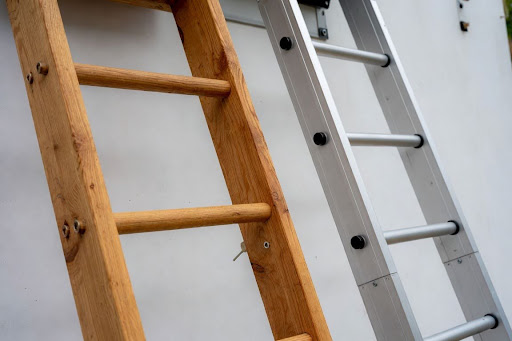
Are Wooden or Aluminium Loft Ladders Safer?
Both wooden and aluminium loft ladders can be safe when they meet appropriate safety standards, are installed correctly and have a suitable load rating. Rather than choosing a ladder based solely on material, look at the complete design.
Important safety factors include sturdy treads, a secure locking mechanism, appropriate handholds, correct positioning and a weight rating capable of supporting the user plus anything being carried into or out of the loft.
Clearance-certified loft ladders intended for the UK market should comply with the relevant safety requirements, including BS EN 14975 where applicable.
The perfect loft ladder is therefore not necessarily the strongest or heaviest model on the market. It is one that is correctly matched to your home and how you intend to use it.
Wooden vs Aluminium Loft Ladders at a Glance
Factor | Wooden Loft Ladders | Aluminium Loft Ladders |
Weight | Generally heavier | Lightweight |
Feel underfoot. | Solid and sturdy | Lighter feel |
Treads | Often wider | Typically narrower rungs or treads depending on model |
Maintenance | Check wood for moisture damage, cracks or warping. | Generally low maintenance |
Moisture resistance | Depends on treatment and environment | Naturally resistant to corrosion |
Appearance | Traditional, premium aesthetic | Modern, practical appearance |
Operation | Can require more effort due to weight | Typically easier to manoeuvre |
Frequent use | Well suited to regular access | Suitable when correctly specified |
Installation | Heavier to handle | Lightweight and relatively easy to install |
Space-saving options | Folding designs are common. | Folding, sliding and telescopic options are common. |
Both materials have clear benefits, so your final decision should be based on the ladder as a complete product rather than assuming wood or aluminium is inherently superior.
Are Wooden Loft Ladders Stronger?
Wooden loft ladders are known for their sturdy construction and solid feel.
Quality timber is a naturally durable material and is capable of supporting substantial loads when the ladder has been properly designed and manufactured. Some wooden ladders may have a higher maximum load capacity than their aluminium counterparts, although this is product-specific rather than a universal rule.
You should always check the manufacturer’s stated load rating.
The relevant weight is not simply the weight of the user. If someone weighs 90kg and carries a 15kg storage box down from the loft, for example, the ladder is supporting approximately 105kg in addition to the dynamic forces generated during movement.
This is why load rating is essential when choosing any loft ladder.
Wooden loft ladders also typically have substantial treads, which can provide comfortable footing during regular access. This can make them particularly appealing if you use your loft frequently rather than only entering it a couple of times a year.
What Are the Safety Benefits of Wooden Loft Ladders?
One of the biggest benefits of wooden ladders is their sturdy feel.
The additional weight and rigidity of wood can make a quality ladder feel substantial when climbing. Wider treads can also provide a larger surface beneath your feet, which some users may find reassuring during daily use or frequent trips into the loft.
Wooden loft ladders can also offer an attractive, traditional appearance. A well-made timber ladder paired with an attached hatch can create a more premium finish than a basic metal model, making it suitable for homeowners who care about both function and aesthetics.
At Vital Loft Solutions, our wooden hideaway loft ladder is designed to fold away within the hatch when not in use and includes a heavy-duty handrail to assist access.
However, material quality matters. Not every wood ladder will provide the same durability, strength or resistance to environmental conditions.
Can Wooden Loft Ladders Crack or Warp?
Wood is a natural material, which means environmental conditions can affect it over time.
A quality wooden loft ladder that is appropriately manufactured, treated and kept in suitable conditions should provide a long service life. However, timber can degrade if repeatedly exposed to excessive moisture or significant temperature fluctuations.
In humid conditions, untreated or damaged wood can potentially absorb moisture, which may contribute to swelling, warping or deterioration over time.
This does not mean wooden ladders are inherently weak. In reality, good-quality timber ladders are extremely durable when used in the environment for which they were designed.
Regular checks should nevertheless look for cracks, loose fixings, unusual movement and signs of water damage.
If your loft has persistent condensation or moisture issues, the underlying cause should also be investigated rather than simply choosing a different ladder material.
Are Aluminium Loft Ladders Safe?
Yes. Quality aluminium loft ladders can provide extremely safe access when correctly designed and installed.
Aluminium is one of the most popular materials for loft ladders because it combines strength with low weight. This makes aluminium ladders relatively easy to lower, retract and install compared with heavier wooden alternatives.
Aluminium also has excellent corrosion resistance for normal domestic use and requires relatively little maintenance.
This makes it particularly practical for a loft environment where temperature and humidity can fluctuate throughout the year.
Vital Loft Solutions offers both two-section and three-section aluminium loft ladder options, giving homeowners different solutions according to the space available and the access required.
What Are the Safety Benefits of Aluminium Loft Ladders?
The main benefit of aluminium is its strength-to-weight ratio.
Because an aluminium ladder is lightweight, the user generally has less physical weight to control when extending or retracting it. This can make operation easier, particularly where the ladder is accessed regularly.
Some modern designs also incorporate features that make operation more controlled. Vital Loft Solutions’ three-section aluminium ladder, for example, uses a spring-assisted system to help with lowering and storing the ladder and includes an in-loft handrail.
Aluminium is also resistant to corrosion, making it a low-maintenance material for most domestic loft environments.
Its light weight does not mean it lacks strength. A correctly engineered aluminium ladder can achieve a substantial load rating while remaining significantly lighter than a comparable wooden ladder.
Can Aluminium Loft Ladders Be Slippery?
Tread design and condition matter with any ladder.
Metal rungs can become slippery if they are wet, dirty or contaminated, potentially increasing the risk of a slip. However, quality aluminium loft ladders are designed with tread patterns or profiles intended to improve grip.
The important point is to keep the ladder clean and dry and inspect its condition regularly.
You should never climb a loft ladder with wet footwear or use it when the treads are contaminated with substances that could reduce grip.
The same principle applies to wood. No material eliminates the need for appropriate tread design and sensible use.
Which Loft Ladder Is Better for Frequent Use?
For frequent use, a substantial wooden loft ladder can be an excellent choice.
Wooden ladders tend to feel sturdy and often feature wider treads, which can make repeated trips into the loft more comfortable. Their solid construction also makes them particularly appealing where the loft is used regularly for storage.
However, a good-quality aluminium ladder can also be suitable for frequent use.
Features such as handrails, spring-assisted operation and appropriate tread design may be more important than the material itself.
Think about what you will actually be doing. Someone accessing light Christmas decorations twice a year has very different requirements from a homeowner regularly moving storage boxes in and out of the loft.
Frequency of use should therefore be one of the main factors that determine your ladder choice.
Which Loft Ladder Is Better for Occasional Use?
Aluminium loft ladders are particularly popular for occasional household access.
Their lightweight construction makes them easy to operate, while folding or sliding designs allow the ladder to disappear into the loft when it is not required.
They can also provide a cost-effective solution if you simply need reliable access to boxes, suitcases and seasonal belongings.
A basic aluminium ladder can therefore make more sense than paying for a premium wooden system if you only access the loft occasionally.
The best loft ladder is the one that matches your actual requirements rather than simply offering the most features.
What About Telescopic Loft Ladders?
A telescopic loft ladder can be an excellent option when available space is limited.
Rather than folding in large sections, the ladder collapses into itself to form a compact unit. This makes telescopic designs particularly useful for smaller loft openings or areas where a traditional folding ladder does not have enough clearance.
Vital Loft Solutions offers a telescopic loft ladder designed for compact loft access. It incorporates an automatic locking mechanism intended to secure the ladder when it is extended.
For homes with tight spaces, this type of ladder can offer a practical alternative to both traditional wooden and multi-section aluminium models.
Does the Loft Hatch Matter?
Yes. The hatch is an essential part of a safe loft access system.
The ladder must work correctly with the opening, and the surrounding ceiling needs to accommodate the ladder’s operation. A poorly positioned or undersized hatch can make even a high-quality ladder awkward to use.
Some wooden ladder systems are supplied with an attached hatch as a complete kit, allowing the ladder and trapdoor to operate together.
If the existing opening is unsuitable, Vital Loft Solutions also provides loft hatch installation and upgrades.
The hatch should be considered alongside the ladder rather than as an afterthought.
Does Your Loft Environment Affect the Best Ladder Material?
The installation environment can affect the suitability and lifespan of different ladder materials.
A normal dry domestic loft should generally be suitable for either quality wood or aluminium. However, excessive moisture, condensation or extreme temperature fluctuations can place additional stress on materials.
Aluminium offers excellent resistance to corrosion under typical domestic conditions, making it particularly low maintenance.
Wood can also provide excellent durability, but it should be periodically inspected for signs of moisture damage, cracking or warping.
If the loft is unusually humid, the priority should be determining why. Problems with ventilation, insulation or moisture should not be ignored simply because a corrosion-resistant ladder has been installed.
Vital Loft Solutions can also advise on loft insulation and other improvements when planning how to make better use of the space.
What Safety Features Should You Look For?
Regardless of whether you choose wood or aluminium, there are several safety features worth considering.
The ladder should have a secure locking or loading mechanism, adequate tread depth and grip, suitable handholds where appropriate, strong fixings and a clearly stated maximum load.
The ladder size must also match the ceiling height and opening.
Incorrect measurements can affect the operating angle and stability of the ladder, so you should measure the floor-to-loft-floor height as well as the hatch dimensions before selecting a product.
Professional installation can help ensure these factors are assessed together.
Do Wooden and Aluminium Loft Ladders Need Maintenance?
Yes. Both types of ladder require basic inspection and maintenance.
For wooden ladders, check for cracks, splitting, warping, loose fittings and signs of water damage. Well-manufactured and properly treated timber should require relatively little upkeep, but regular inspection helps identify potential problems before they affect safety.
With aluminium ladders, inspect the rungs, joints, hinges, sliding sections, locking mechanisms and fixings. Look for damage, unusual movement or corrosion, particularly around components made from other metals.
Moving components should operate smoothly, and the ladder should never be used if its locking system is damaged or fails to engage correctly.
Regardless of material, stop using a ladder if you notice a significant defect and have it assessed before using it again.
Is a More Expensive Loft Ladder Safer?
Not necessarily.
Cost can reflect higher-quality materials, additional features, more substantial construction or a more premium finish, but price alone does not determine safety.
A lower-cost aluminium ladder that is correctly rated, professionally installed and perfectly suited to occasional access may be safer in practice than a premium wooden ladder that is the wrong size or has been incorrectly fitted.
Rather than shopping by price alone, compare the specification, load rating, safety features, construction quality and suitability for your loft.
Installation quality is equally important.
Should You Install a Loft Ladder Yourself?
Some loft ladders are marketed for DIY installation, but fitting one correctly requires accurate measurements and secure attachment to the surrounding structure.
The ladder needs to be positioned at the appropriate angle, the hatch must provide sufficient clearance, and every fixing needs to be capable of handling the forces generated as somebody climbs.
If the existing hatch needs altering or enlarging, the installation can become more involved.
Professional loft ladder installation removes much of this uncertainty by allowing the loft, hatch, ceiling height and available space to be assessed before the ladder is fitted.
Frequently Asked Questions About Wooden vs Aluminium Loft Ladders
Are wooden loft ladders safer than aluminium?
Not automatically. Both materials can provide safe access when the ladder is properly designed, rated and installed. Wooden ladders often feel more substantial and may offer wider treads, while aluminium ladders are lightweight and easy to operate.
Are wooden loft ladders stronger?
Some wooden loft ladders have higher maximum load ratings than comparable aluminium models, but this depends on the individual product. Always use the manufacturer’s stated load rating rather than assuming that one material is stronger.
How much weight should a loft ladder hold?
The required capacity should cover the user’s weight plus anything they may carry. Always check the exact maximum load specified for the ladder and never exceed it.
Do aluminium loft ladders rust?
Aluminium is naturally resistant to corrosion, making it a low-maintenance option for loft access. However, other metal components, fixings and moving parts should still be inspected periodically.
Are wooden ladders suitable for humid lofts?
Quality treated timber can be durable, but prolonged exposure to moisture can eventually affect wood. If your loft has persistent high humidity or condensation, the underlying moisture or ventilation problem should be addressed.
Which material is best for a modern home?
Aluminium often complements a modern, functional interior, while wood offers a traditional or premium appearance. However, because most loft ladders are hidden when the hatch is closed, practicality should usually take priority over appearance.
Which ladder is best for a small loft opening?
A telescopic ladder can be particularly suitable where space is restricted because it collapses into a compact form. The best option will depend on the exact hatch dimensions and ceiling height.
How long do loft ladders last?
There is no single lifespan for every ladder. Material quality, installation, frequency of use, environment, load and maintenance all influence durability. Regular inspection and appropriate use can help maximise the life of either a wooden or aluminium ladder.
Wooden vs Aluminium Loft Ladders: Which Should You Choose?
For wooden vs aluminium loft ladders, safety depends more on design, load rating, installation and appropriate use than material alone.
Wooden loft ladders are sturdy, substantial and often have wider treads, making them an attractive option for regular access. Their traditional appearance can also provide a more premium feel.
Aluminium loft ladders are lightweight, corrosion-resistant and easy to operate, making them an excellent choice for practical everyday or occasional loft access. Folding, sliding and telescopic designs also provide useful options where space is limited.
Rather than trying to determine which material is universally better, choose the ladder that fits your property and how you intend to use your loft.
At Vital Loft Solutions, we provide professional loft ladder installation throughout Peterborough and surrounding areas, alongside loft boarding, insulation, hatches, shelving and other storage improvements.
If you are unsure whether a wooden, aluminium or telescopic ladder is best for your home, book a free loft survey with Vital Loft Solutions and let the team assess your loft space, hatch and access requirements.